
Ever wondered how the brands you find at the Good Food & Wine Show actually got their start?
Sometimes it’s a family farm and a really good macadamia. Sometimes it’s a newborn baby. Sometimes an unexpected challenge sends you down a completely new path. And sometimes, you end up with a fridge packed full of goat feta and nowhere for it to go…
Behind every stand are passionate producers, makers, and growers with some amazing stories to tell. So, ahead of the Brisbane Good Food & Wine Show, we’re going beyond the products to meet eight exhibitors and discover the stories behind the brands.
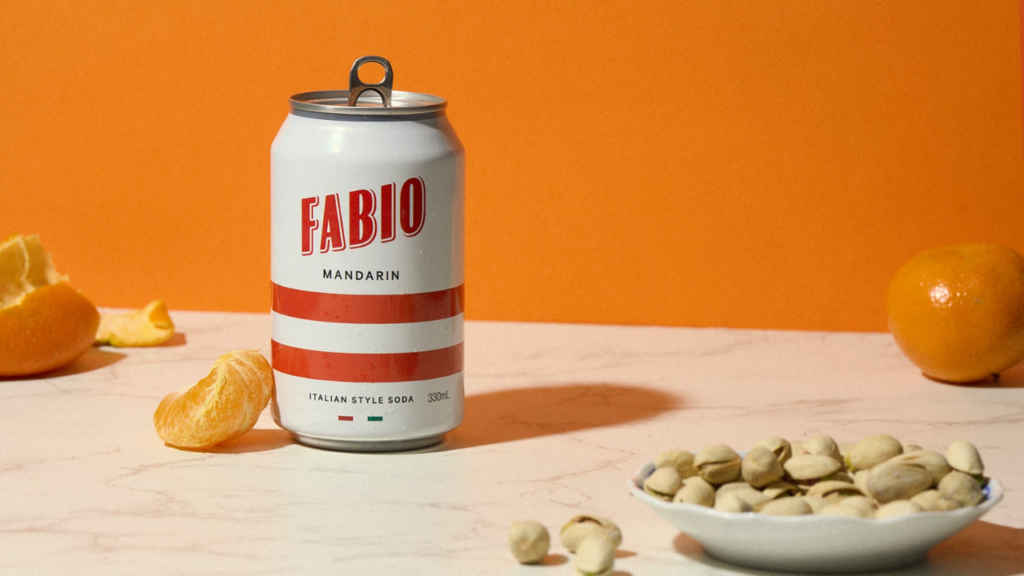
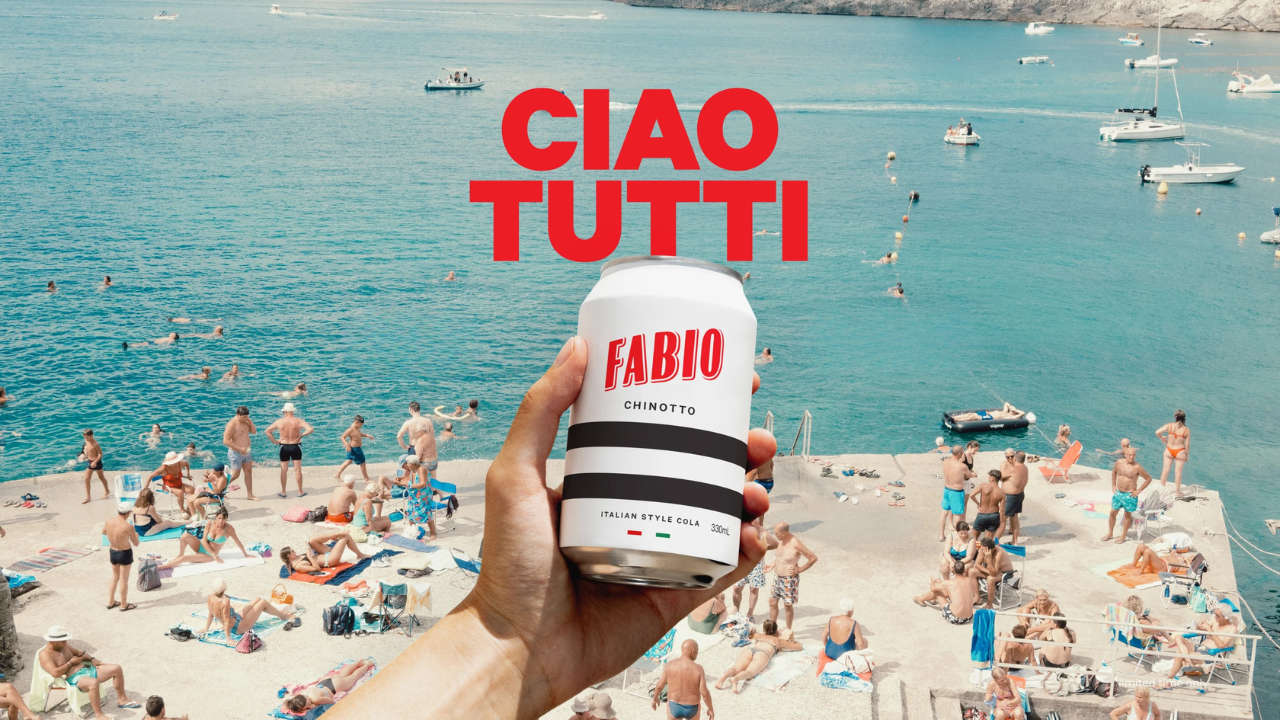
Fabio Soda
For Fabian, the founder of Fabio Soda, the idea for the brand came after a life-changing experience.
Following bowel surgery in 2018, Fabian had to relearn what he could eat and drink. “Your gut becomes very honest with you, very quickly,” he says. Ingredients he’d never thought twice about suddenly mattered, and artificial sweeteners became a particular problem.
As he started reading labels more closely, Fabian noticed that many of the drinks marketed as alternatives to traditional soft drinks contained stevia, erythritol, or aspartame – none of which worked for him.
“The gap was obvious once I saw it. There was nothing made here, with real ingredients, that tasted the way a proper Italian soda should. Nothing I could actually drink.”
The solution took Fabian back to happier memories: growing up in an Italian-Australian household where Sunday lunches were loud, long, full of food, and accompanied by chinotto – the bittersweet Italian soft drink traditionally made using the fruit of the chinotto orange.
That combination of necessity and nostalgia became Fabio Soda – Australian-made sodas made with real Australian sugar, without artificial sweeteners, and designed to be enjoyed alongside good food.
“The old way of making soda was already the right way,” Fabian says.
Hills of Byron Macadamias
It started with more than 2,000 macadamia trees, planted by hand on the family farm.
As their first proper harvest approached, the family behind Hills of Byron decided they wanted to do more than simply sell their crop.
“After plenty of long discussions around the dinner table, we decided that if we were going to put so much work into growing the macadamias, we wanted to take the next step – add value to what we produced and create a brand of our own.”
That meant building their own on-farm processing facility and getting the whole family involved, from picking through to packing. Then came the fun part: flavours.
The Coffee Macadamia alone took more than a year of testing and tweaking, with taste-testing becoming “a real family and friends affair”.
After plenty of sampling and debate, six flavours made the cut, including Coffee, Maple, Raspberry Coconut, Sweet Chilli, Hot Chilli, and Honey.
From 2,000 trees planted by hand to the finished packet, this really is a family affair.
Uprising Glassware
How do six years in the Canadian Rockies end up inside a drinking glass? For Uprising Glassware founder Kurt Menzies, there’s a surprisingly straight line between the two.
Kurt spent six years working as a guide among the Rockies, surrounded by landscapes on a scale he’d never experienced before. “Those peaks make you feel small, in a good way,” he says. “My favourite part of the job was watching nature work on my guests.”
When he returned to Australia and eventually settled in Tasmania, he found himself looking at our own landscapes differently. He also wanted to become part of Tasmania’s thriving drinks scene. There was just one small problem: he knew nothing about making wine or spirits.
What he did know was wilderness and creative design, and that became Uprising Glassware.
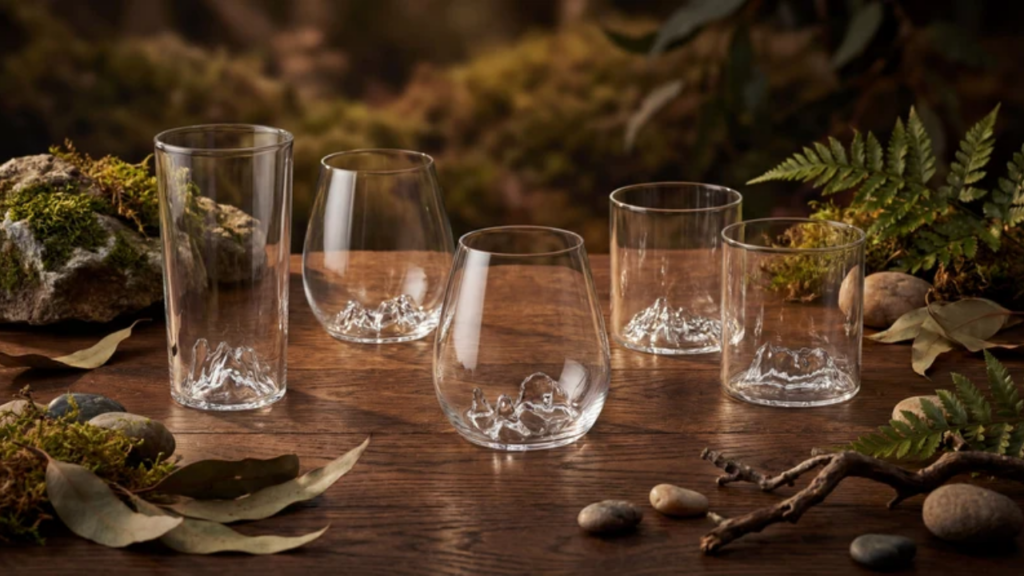
Look inside one of Kurt’s glasses and you might find a mountain, an Australian landmark, or native wildlife recreated as an intricate 3D form. The designs started with Tasmania and have since travelled further around Australia – and Kurt has too.
“I’m actually on the road right now, surfing my way up the coast to Brisbane for the show,” he says, taking a few detours to Australian landmarks along the way.
Research trip, surf trip… we’ll call it both.
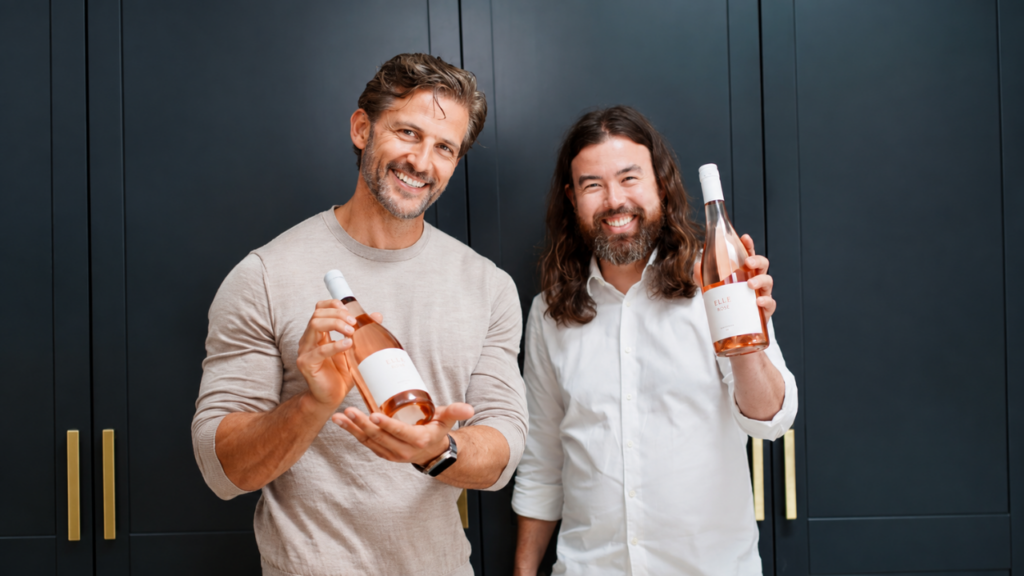
Elle Rosé
Some wine ideas begin in vineyards. Elle Rosé began with a very proud new dad holding his newborn daughter.
Tim Robards was with his daughter, Elle, while giving her mum a break when he started thinking about creating something in her name.
“I was just beaming and thinking I want to make something in her name,” Tim says. “I started thinking something feminine, beautiful, elegant… and then rosé popped into my head.”
Elle Rosé. There it was.
Coming up with the name was the easy part. Together with business partner Shun, Tim set himself a pretty ambitious challenge: create an Australian rosé that could stand alongside the French wines they loved.
That meant finding the right grapes, the right winemaker, plenty of benchmarking, plenty of notes and, naturally, plenty of tasting.
And the little girl who inspired it all? She’s already getting involved.
“She’s already proud of her wine,” Tim says. “She runs around the house with it and gifts it to people who come over as if it’s her present to them.”
To be fair, her name is on the bottle.
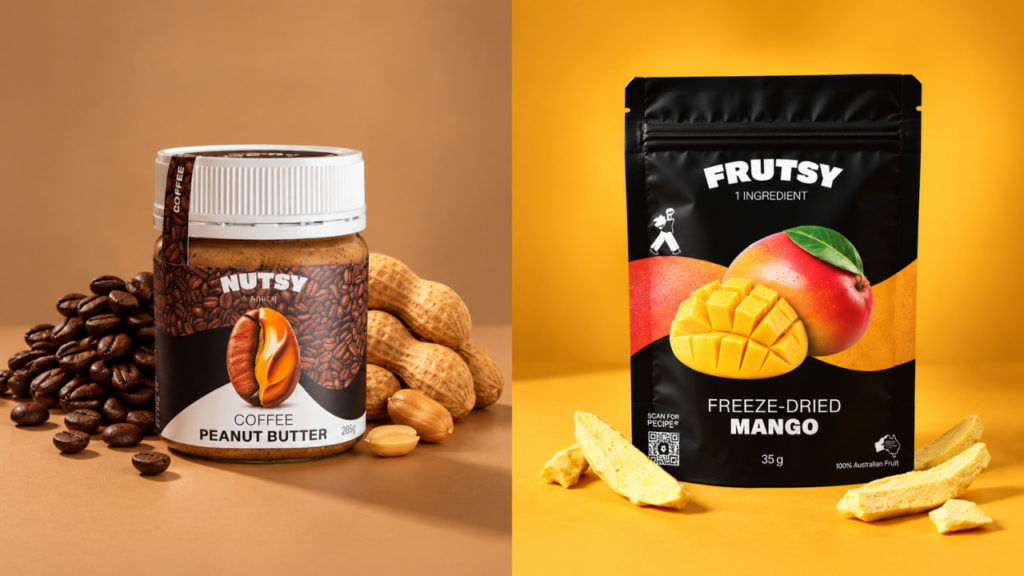
Nutsy & Frutsy
Coffee in one hand, peanut butter nearby, and one very important question: why aren’t these two things together?
That thought was the spark behind Nutsy, after founder Miraj tried mixing a shot of coffee into homemade peanut butter. The first attempt was, in his words, “a complete disaster.”
Starting in a small garage, Miraj spent around a year perfecting the recipe and worked his way through eight or nine food processors along the way. That persistence paid off, with one coffee peanut butter eventually growing into a range of Coffee, Coconut, Orange, and Natural flavours.
Then came Frutsy. While sourcing freeze-dried fruit for Nutsy’s product development, Miraj found himself snacking on the ingredients and saw an opportunity for something new.
“Innovation is what interests me most,” he says. “I want to develop something different and unique, something that gives people a new experience.”
Two brands, plenty of experimenting, and eight or nine broken food processors. Not bad for an idea that started over breakfast.
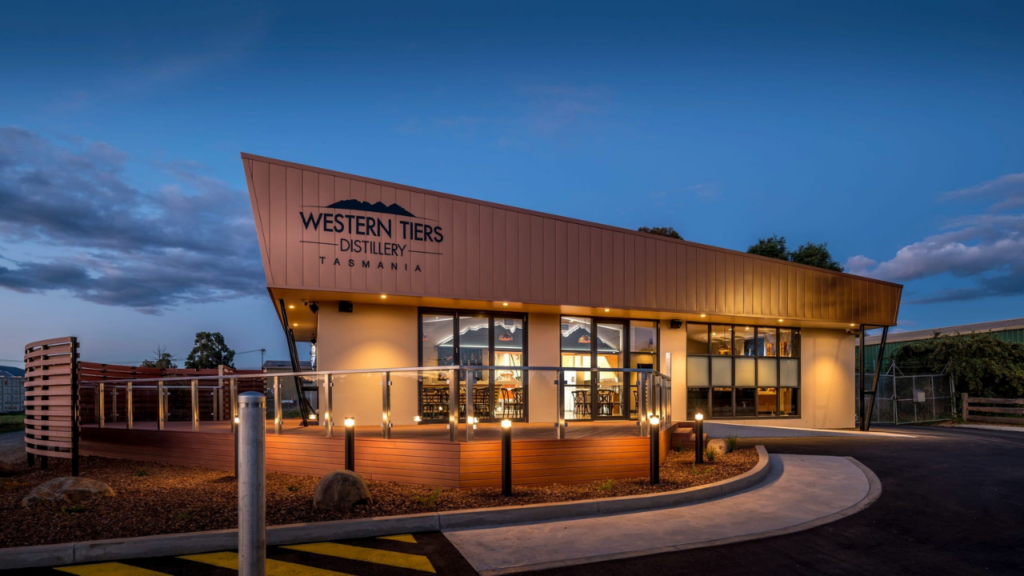
Western Tiers Distillery
Most distilleries start by buying a still. Western Tiers started by building them.
Founders Mark and Tim had been designing and fabricating distillation equipment for other producers when they created a working showroom to demonstrate their equipment. Then, something unexpected happened.
“We fell in love with the Tasmanian spirits industry,” they say. “Somewhere along the way our working showroom became our distillery.”
Even Head Distiller John started as a fabricator, building and installing distillation equipment before eventually operating it himself. That hands-on knowledge still shapes how they work today. “We’re not trying to make the most spirit we can; we’re trying to make spirits that are beautiful and bold, just the way we like them.”
And the inspiration behind it all? “The Great Western Tiers isn’t something we went looking for to build a brand around; it’s home.”
Its lakes, mountains, bluffs, huts, and stories have naturally found their way into the identity of Western Tiers – capturing a little of a place that’s “beautiful, bold, sometimes a little rugged.”
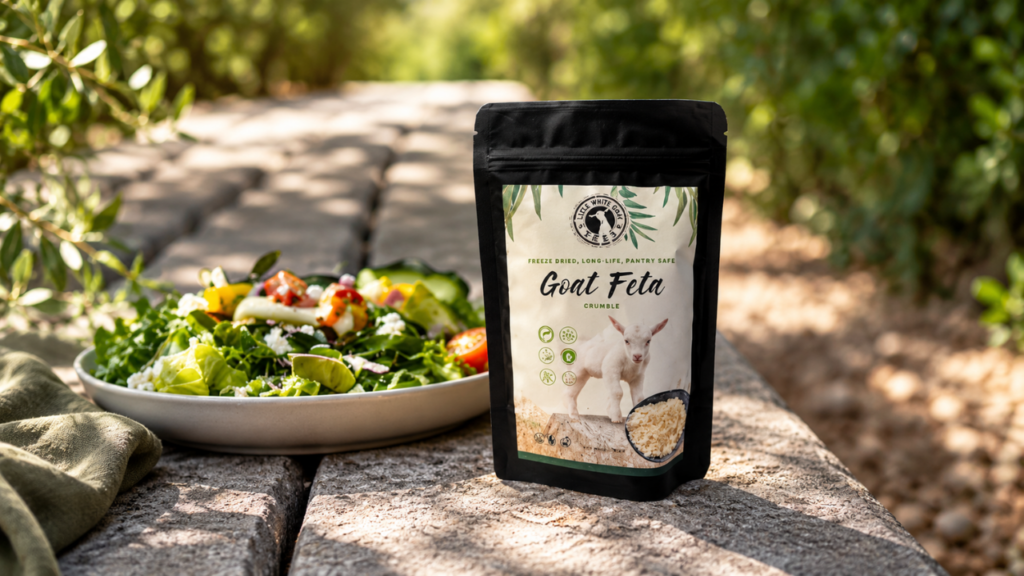
Little White Goat Cheese
Goat’s-milk soap, a cheesemaking class, a global pandemic, and a fridge full of feta. It’s not the most obvious recipe for starting a cheese business, but stick with us.
Little White Goat Cheese began when founder Karen, who had been making soap using milk from her goats, decided to try a local cheesemaking class. “I went into that cheesemaking class thinking it might be a nice hobby and came home completely obsessed,” she says. “There was something magical about turning our own goat milk into beautiful cheese.”
Then COVID arrived, restaurant orders disappeared almost overnight, and Karen found herself with a slight logistical issue. “Nobody told the goats there was a pandemic.” They kept producing milk, Karen kept making feta, and the fridges kept filling up. “I remember thinking, ‘Either I find another way to preserve this, or we’re eating feta until 2037.’”
That problem led Karen to try something a little unexpected: freeze-drying the feta. There wasn’t exactly a handbook for it, but the experiment worked. The first batch was crunchy, intensely cheesy, completely different – and sold out in a single day.
In Karen’s words, it came down to “desperation, curiosity and a lot of goats.” Frankly, we couldn’t have put it better ourselves.
Murray Street Vineyards
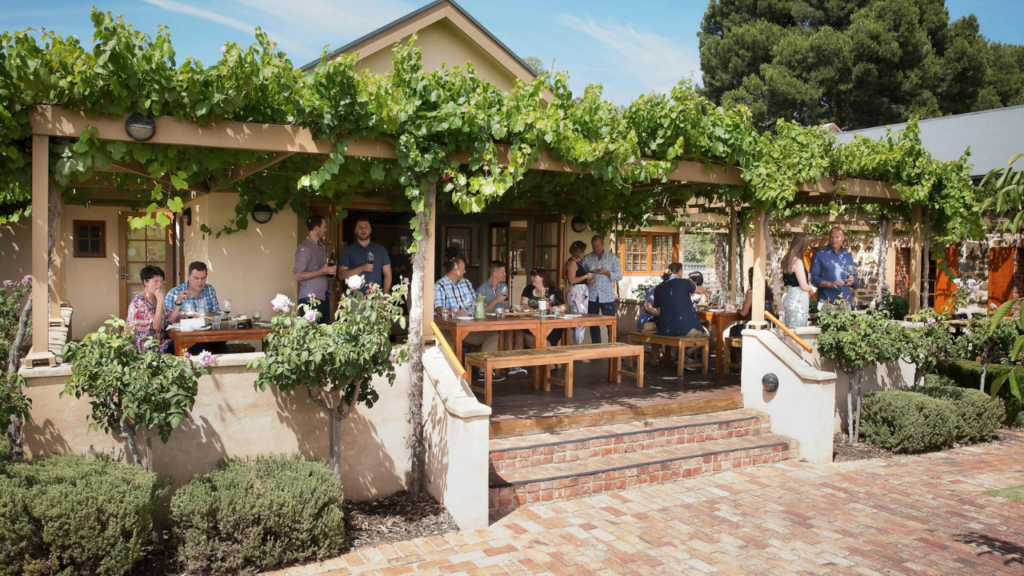
For Murray Street Vineyards, making wine starts with knowing exactly where it comes from.
Based in the Barossa Valley, the family-owned estate manages its vineyards as 50 individual blocks, allowing each part of the land to be treated according to its own character. Among them are old-vine Shiraz and Grenache plantings that have been part of the landscape for decades.
That attention to detail continues in the winery, where traditional French oak sits alongside concrete eggs, terracotta amphora, and sandstone jarres – different vessels used to explore what each variety can become while keeping the fruit at the centre of the wine.
It’s a mix of old vines, curious winemaking, and a very Barossa sense of place – with plenty to discover in the glass.
Come Meet the People Behind the Stands
Eight brands, eight very different stories, and plenty to taste along the way.
They’re just a handful of the producers, makers, growers, winemakers, distillers, and food lovers you’ll meet around the show floor at the Brisbane Good Food & Wine Show, 23-25 October.
Come meet the people behind the products, hear their stories, taste what they’ve been working on, and discover a few new favourites along the way!